Airports breathe. Not metaphorically, literally. Fresh air comes in at intake grilles the size of billboards, flows through miles of ductwork, meets baggage belts, boarding bridges, security queues, and arrives at your nose along with a little kerosene and a dash of pretzel salt. That vast respiratory system keeps passengers comfortable, workers safe, and sensitive equipment alive. When it chokes, schedules suffer and budgets bleed. Commercial duct cleaning is not glamorous, but it is one of the quiet levers that keep terminals, concourses, and rail hubs on time and out of trouble.
I have walked those catwalks at 2 a.m., counting the seconds between AHU fan whine and the clunk of VAV boxes waking up for the morning push. I have peered into returns where glitter from duty free displays drifted in dunes and jet soot ringed turning vanes like eyeliner. The story repeats across transportation hubs worldwide. High occupancy, long hours, outdoor air heavy with combustion particles, and frequent interior renovations all add up to one certainty: neglect the ductwork and the building will make you pay for it.
Why airports are a different animal
A standard office building cycles a couple of thousand people in a day. A mid sized terminal cycles tens of thousands, sometimes hundreds of thousands when you count meeters and greeters, concession workers, TSA agents, operations staff, and overnight maintenance. Occupancy starts before dawn and runs past midnight, which allows smaller windows for any intrusive work. Add strict security, a maze of restricted zones, and duct paths interrupted by fire smoke dampers and blast rated compartments. You cannot stroll in with a negative air machine and a dream.
The air itself is different. Intakes often sit on roofs with excellent wind exposure and a front row seat to aircraft taxiways. That means more ultrafine particles from jet engines and more black carbon. Train stations near diesel lines tell the same tale. The mix of contaminants in these facilities skews darker and stickier compared to offices, and it rides deep into coils and ducts if filters are underspecified or damaged. Then there is the glittering retail. New kiosks and pop ups arrive every quarter, bringing sawdust and drywall dust that fill return grilles like cake flour.
Aging infrastructure adds another layer. Many airports are perpetual construction sites, phasing expansions while keeping gates open. Temporary walls, detours, and emergency AHUs pressurize odd corners. It is easy to end up with ducts that were pure in the 90s and now look like a smoker’s lung.
What actually accumulates in airport ducts
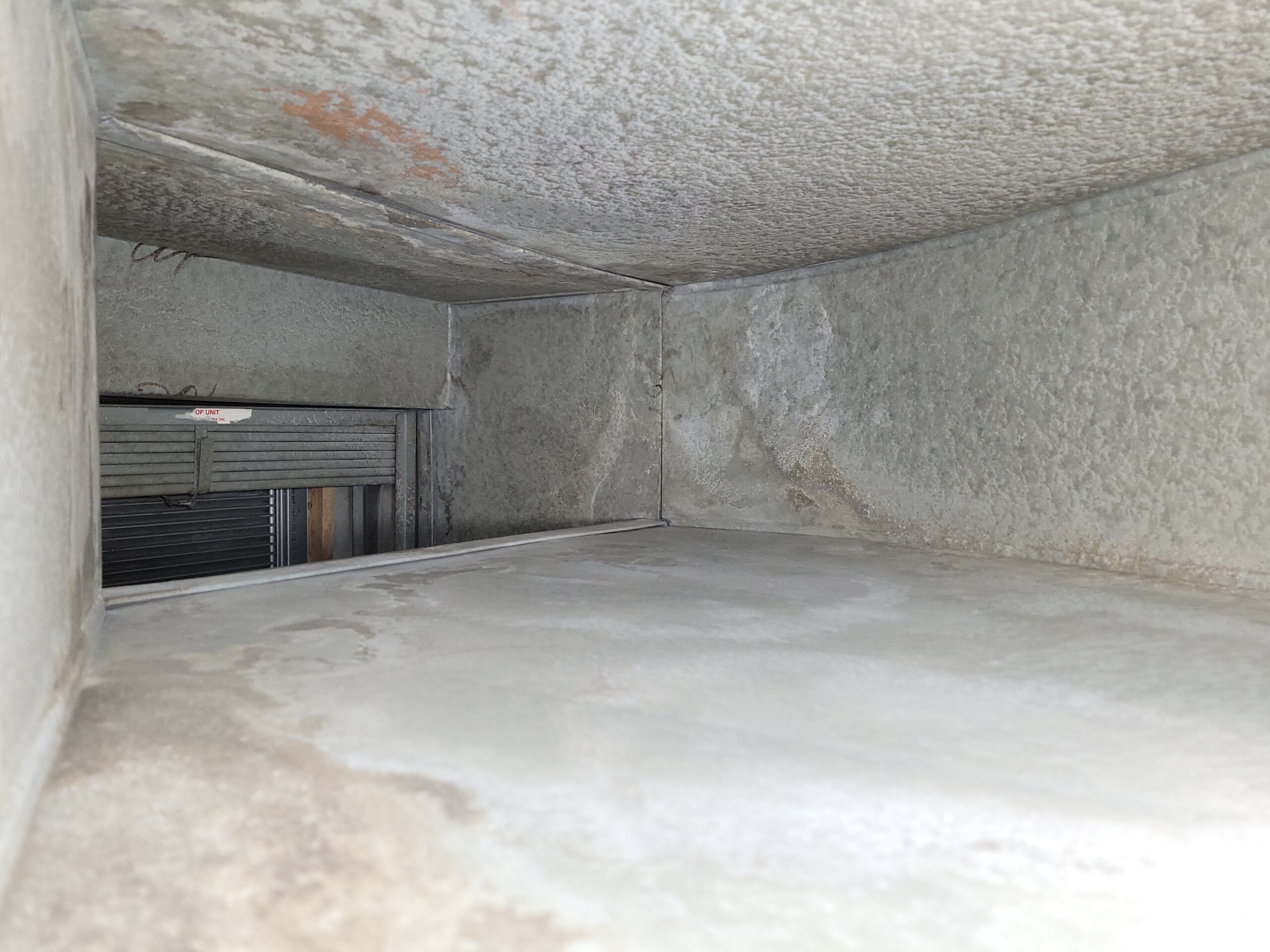
When we open a sample port, we tend to find a familiar cast. Coarse debris from renovation projects travels a short distance and piles near returns. Fibrous lint from uniforms and mops forms soft mats on turning vanes. Grease and aerosolized cooking vapors escape concessions and settle as thin films on duct skins and AHU panels, even with dedicated grease ducts doing most of the heavy lifting. Soot from aircraft and ground service equipment brings ultrafine particulates that are light enough to cruise past imperfect filter seals and embed deeper in insulation. Pollen and dust enter during high outside air periods in mild weather. In damp climates, condensate carryover leaves mineral films, and any microbial growth tends to track with water mishandling rather than duct dirt alone.
That last point deserves a clear statement. Commercial duct cleaning is not a mold cure for every ill. If a duct is internally lined and has gotten wet from a failed humidifier or coil carryover, you might need selective removal and replacement of liner sections, not just a brush with a HEPA vacuum downstream. Cleaning removes reservoirs of dust and soot, reduces odor hold, and assists in lowering irritant loads. It does not replace fixing water control, sealing bypasses, or upgrading filters.
Health, comfort, and the complaint loop
Airports collect complaints like delayed flights collect sighs. The loop is simple. At 6 a.m., a security lane opens to a crowd. Supply air cannot keep up because the VAV boxes were set for last year’s traffic. Return grilles nearby are caked, and the AHU is dragging extra static because the return duct is lined with a surprising extra millimeter of grime. Someone turns the temperature setpoint down. The system shoves harder. Noise climbs, drafts pick up, and complaints arrive about both heat and cold. An irritated worker mentions a smell that is probably a whiff of jet exhaust slipping through and binding to dust films in the ducts. Facilities calls the controls contractor. Two weeks later, someone finally checks the return branches.
The health stakes are real, especially for people working long hours in screened zones. Prolonged exposure to elevated fine particulate levels correlates with respiratory and cardiovascular strain. Most modern terminals aim for filtration efficiencies in the MERV 13 to 15 range on the primary system. That helps. But filters are only as good as their seals and maintenance schedule. If downstream ducts serve as reservoirs, especially in areas with frequent filter access traffic, you can see re entrainment spikes after maintenance events. Cleaning, properly staged, cuts those spikes and reduces dust burden on coils and sensors so they stay more stable between PMs.
Energy and the cost of drag
Dirty ducts increase pressure drop. Not dramatically, but enough. If you think of a mile of main and branch ductwork with a roughness factor that creeps up from a thin film of dust, and a handful of turning vanes with small piles on their leading edges, you can add somewhere between a few tenths to more than a full inch of water column to the system over time, depending on design and neglect. That extra static lands on the fans and pumps, and the system starts living at a higher speed. Power varies with the cube of fan speed, so even small increases bring outsized energy penalties.
I have seen post cleaning fan curves drop to more polite regions, yielding 5 to 15 percent savings on fan energy in the first year when the starting condition was poor. That is not every job. If the ducts were reasonably clean and the major issue was filter bypass, cleaning alone will not write you a rosy energy story. But in older terminals with churn and concession heavy concourses, the reduction in drag, the drop in coil pressure drop after debris removal, and the more consistent sensor readings do stack up.
Then there is the soft energy effect. Controls troubleshooters tend to mask friction with higher static setpoints. Once you cut friction back to design, you can ratchet static targets down by a quarter to a half inch and allow the VFDs to loaf more, which extends equipment life and trims noise.
Security and scheduling, the two immovable objects
Cleaning ductwork in a secure environment is like operating a small theater troupe. You need cast lists, clearances, props, and a script with precise cues. The best time to work is often the worst time for staff morale, between last push and first flights. On international arrival corridors, I have had a 4 hour window with a hard stop to avoid mixing with arriving passengers. Equipment must be staged outside checkpoints whenever possible. Every hose, drill, and vacuum body is logged, tagged, and escorted. Any cutting tool for access ports demands extra scrutiny.
That changes methodology. Even when a full section clean is the right technical answer, you might phase it over weeks, moving nightly in 40 foot bites. Negative air machines must be quiet enough to keep neighbors happy. Access panels should be rated and gasked to meet smoke and fire criteria, and you need a plan to restore any penetrations without voiding rating labels. If you are working near sterile areas, your containment is tested by an infection control risk assessment, especially in terminals attached to medical screening suites.
On active rail hubs, trackside vibration and dust spikes can surprise you in the middle of a shift. Work crews should be trained to pause and reseal quickly if the outdoor environment changes, for example when a prolonged idling event blows diesel soot clouds toward outside air intakes. The choreography matters as much as the brush.
Methods that actually work in transportation hubs
Mechanical agitation plus high efficiency extraction remains the backbone of commercial duct cleaning. Brush systems on flexible shafts, often with speed control, dislodge accumulations while a HEPA filtered negative air machine captures what comes loose. In airports, size matters. Long runs and high ceilings mean fewer access points is not a virtue. Strategic placement near turning vanes, transitions, and fire smoke dampers pays off because those spots act as baffles that trap debris.
Compressed air tools like whips and skipper balls help in round ducts over baggage halls. They travel further without heavy friction and can navigate support rods. The catch, of course, is noise. Use them under strict time windows and warn neighbors. For returns serving concessions, a degreasing approach might be needed upstream of agitation. Choose food safe products with low VOC content and control rinse so you do not drive residue downstream.

On lined ducts, go gently. Aggressive brushing can scar the liner, raising fibers and creating a future dust magnet. Use soft brushes, lower RPM, and vacuum the surface rather than scour it. If liner is degraded, be honest about replacement. No amount of scrubbing will make a shedding liner safe or clean.
Coils and drain pans are their own realm. Even if the ductwork sparkles, a fouled coil face ruins airflow and becomes a microbial billboard. Foam or gel cleaners with controlled dwell time, followed by a rinse captured without overspray, keep water where it belongs. Always verify drain pitch and trap integrity before adding any water to the system, or you will be mopping at dawn.
What to put in the scope
Scope creep loves an airport. One day you are cleaning an international departures return main, the next you are getting calls about the art installation dusted during your work. Control the scope with a map and metrics. For a large terminal, break the system down by AHU and area, then by supply and return trunks, then critical branches. Confirm terminal unit types. Document fire smoke dampers with photos before and after. Decide where you will install inspection ports and label them. Build in coil cleaning, pan treatment, and sensor wipe downs if you can reach them safely.
A workable scope also sets cleanliness criteria. A visual standard, like a wipe test that yields no visible residue on a clean white cloth, is practical on night shifts. Some teams use light particle counters upstream and downstream to confirm improvement. That approach can be noisy in the data if the outside air swings during the test period, but as a trend it gives you something to show stakeholders.
A short checklist for planning without pain
- Security and access cleared for every crew member and tool, including after hours contacts Phased schedule aligned with flight banks and concourse closures, with contingency windows Defined inspection and cleaning points, including coils, pans, and sensors, not just duct skin Containment and filtration plan with rated access covers and negative air routing that avoids public paths Quality documentation plan, with before and after photos tied to a duct map and sign offs from facilities
The dance on the night shift
The most efficient teams move like a pit crew. They roll up at 11 p.m., scan badges, and stage equipment on carts small enough to slip through service elevators. Containment goes up fast with zip walls and foam blocks around duct openings. The first tech opens the access panel, checking for any fused liner or loose fasteners. The second sets the negative air machine and verifies directional flow with a smoke pencil. The brush tech follows the shaft plan, working upstream to downstream, while the helper swaps rods and bags debris.
If a damper appears unexpectedly, the team calls it out on comms, photographs its position, and coordinates a safe cycle with controls before passing through. Meanwhile, the coil crew at the AHU sprays foam on the leaving face, vacuums the return plenum, and replaces any broken light lenses that would otherwise shed dust back into the airstream. The supervisor is the timekeeper, watching the clock and nudging the team past slow patches so the space can reopen before cleaning crews roll in for the day shift reset.
Cleaning without collateral damage
Most complaints after a cleaning job come not from the ducts, but from what was disturbed along the way. That is where airport work demands a certain paranoia. Badge readers near your containment do not enjoy dust. Artwork on concourse walls needs plastic and padding. Fire watch coordination is essential if you are cutting metal late at night. Label every access panel you install with a metal tag. Fire inspectors appreciate legible labels with date and contractor name, and they return the favor at the next audit.
Monitoring sensors are another hidden landmine. A stray elbow can knock a duct static probe or CO2 sensor just enough to throw controls off the next day. Protect them with clamshell shields while you work, clean the probes, and re verify readings before you leave. If you cannot reach a sensor safely, state it in your notes and avoid a future accusation that you left it dirty.
The regulatory backdrop
Airports sit in a tangle of codes and standards, but duct cleaning itself is guided more by industry practice than statute. Many owners reference NADCA standards to define acceptable methods and cleanliness. Fire and smoke dampers must remain accessible, labeled, and not blocked by any new access. Penetrations in rated assemblies must be sealed with listed systems. If any work approaches smoke control systems or stair pressurization ducts in connected terminals, coordinate with life safety teams. International hubs sometimes add their own owner standards that exceed code, particularly for inspection frequency after capital projects.
Indoor air quality programs at airports often track volatile organic compounds and fine particulates as part of sustainability reporting. Cleaning work should support those programs by reducing reservoirs and allowing filters and coils to perform closer to spec. When carbon reduction goals appear in board strategies, remember that cutting fan energy through lower friction is a measurable lever, even if it is modest next to lighting retrofits or chiller plant optimization.
Costs, ROI, and the budget meeting you cannot skip
Numbers always vary, but for context, cleaning a long return trunk and associated branches in a busy concourse often lands in the low to mid five figures per phase, depending on access complexity, night premiums, and security constraints. Full AHU plenum and coil cleaning across a bank can match or exceed that. If you spread the work over quarters to fit operations, you pay some mobilization tax each time. The easy mistake is to try to do too little, too thinly. A token cleaning of a few returns near a complaint zone rarely solves much and leaves leadership skeptical.
Energy savings help, but at a hub, the tighter story comes from risk reduction and stability. You can connect the dots between cleaner ducts, lower coil fouling rate, fewer nuisance alarms from dusted sensors, and fewer hot cold calls at peak activity. Show one or two measured fan energy reductions post cleaning alongside a drop in static setpoint and a modest bump in outside air fraction without triggering comfort complaints. Those make friends at the capital committee table.
A brief case from the field
One international terminal I worked in had a consistent morning odor complaint on the arrivals concourse. It read like jet exhaust, strongest near two baggage claims. Filters were the right rating and recently changed. The operations team had tried raising outside air and sniff tests around doors. Nothing stuck. We opened return trunks during a night shift and found streaks of soot and a sticky film on the internal liner that ran heaviest near a turning vane two bays from the AHU. A construction project six months prior had used that ceiling void as a shortcut and cut a temporary access that was never resealed perfectly. The bypass pulled ramp air into the return during the first morning baggage rush when pressure regimes were still settling.
We patched and sealed the errant cut, cleaned the return sections prone to soot loading, swapped the worst liner sections, and wiped nearby sensors. The odor complaints dropped off. Static setpoints came down by 0.25 inches, and the team regained enough headroom to bump outside air by a few percent on mild days. No miracle, just the basic math of airflow with less friction and less re entrainment of sticky soot.
When not to clean, at least not yet
Cleaning is not a panacea. If you have chronic humidity control failures, a duct wash will not keep mold away for long. Fix the water. If you are planning a ceiling renovation next quarter that will open the same duct sections, defer the clean and do it after. If your filtration is leaking like a sieve at the frame, clean and you will be refilling dust bins by autumn. Seal and upgrade filters first. If the duct insulation is friable or shedding badly, replacement is the honest path. Trying to groom a failing liner wastes money and patience.
Some clients push for antimicrobial coatings inside ducts to keep them fresh longer. Be careful. Coatings can trap debris, complicate future maintenance, and introduce VOCs that your IAQ team then has to report. They have a place in specific, controlled situations, but routine coating after a clean is usually not worth the risk in public facilities.
Choosing a contractor without roulette
Experience in secure, live environments matters. Ask for proof that the crew has worked in aviation or rail and can clear security. Confirm they carry rated access covers and understand fire smoke damper protocols. Verify tool lists against your scope. A contractor who plans to clean a quarter mile of trunk with one small negative air machine is not serious. Look for documentation habits. You want annotated photos get more info that a facilities manager can read a year later when a different contractor asks where the ports are. And if a bidder promises no dust, no noise, and no odor, smile politely and ask how they intend to break the laws of physics.
A five step night shift sequence that holds up
- Arrive early, clear security, and stage equipment outside secure zones with escorts assigned Seal containment, protect sensors and finishes, and perform lockout tagout or controls coordination Set negative air, verify directional flow, then open access and proceed with brush and vacuum by mapped segments Clean coils, pans, and reachable sensors, replace damaged gaskets, and label all new access points QA with photos and wipe tests, restore controls, remove containment, and debrief with facilities before first flights
The long game, not just the clean
The most successful programs treat commercial duct cleaning as part of a cycle with filtration, controls tuning, and construction hygiene. Aim for inspection intervals rather than fixed cleaning intervals. In high load zones near ramps and concessions, plan for annual or biannual inspections with targeted cleaning as needed. After major interior projects, include duct inspection and filter changes in the turnover checklist. Train renovation crews and vendors to keep temporary returns and intakes properly filtered. It sounds obvious, but nothing fills a duct faster than a pop up wall and a reciprocating saw.
Finally, remember the lungs metaphor. Airports breathe, but their airways do not heal themselves. A little attention keeps the system from becoming a burden on every other trade. When the fans spin up at 4 a.m. And the terminal wakes clean and even tempered, you will not get a thank you from the departure board. You will get something better, the silence that means the building is doing its job. And at an airport, silence is rare enough to count as a win.